Nine council seats, one mayor, one clerk. This is the whole elected city government of Detroit, with what each office can do about a real problem and the city's own page for each one. Then build your own person from what you actually need. The county, the state, the police and federal immigration are below it, because they answer for different things.
Names, seats and links checked against detroitmi.gov on November 11, 2026.
Nine seats, two kinds
What "at large" actually means
Two of the nine council seats belong to the whole city. Seven belong to a district. That is the only difference, and it changes who you call.
Who votes for an at-large member?
Everyone in Detroit. Every voter in every district sees both at-large seats on the ballot, so an at-large member needs a majority of the whole city, not a majority of one neighborhood.
What does an at-large member answer for?
The city as a whole. There is no district map for them to protect and no boundary that lets them say a problem belongs to somebody else. The trade is real: they have no home turf and no guaranteed base.
Why does the charter have them at all?
So that some members are elected by the entire city and can work on citywide questions, like a rate, a tax, a department's performance, or a rule that applies on every block. A district-only council can leave a citywide problem owned by nobody.
Who is who right now?
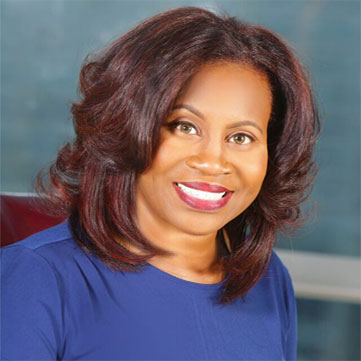
Coleman A. Young II is the at-large President Pro Tem. Mary Waters is the other at-large member. The seven district seats run from District 1 to District 7.
The short version: district means an address, at large means a policy. Two members answer to the whole city, and the other seven answer to a specific map.
The gavel
The president, and the pro tem
James Tate is the Council President and also represents District 1. He has held a council seat since November 2009 and is the body's longest-serving member, by the city's own description.
What the president does
Runs the formal session, controls how legislation is referred to committees, appoints the committee chairs, signs the body's official acts, and speaks for Council as a whole.
What the president does not do
One vote. The president's vote counts the same as the other eight. A president who cannot build five votes loses.
What the pro tem does
Presides when the president is absent, and takes on the president's duties if that office is vacant. Coleman A. Young II is the current pro tem.
Why the district member became president
The seat is chosen by the members themselves, not by the voters. A district member can hold the gavel, and in this Council a District 1 member does.
Being president does not add a vote. It adds the agenda, the gavel, and the microphone. That is real power over what gets heard, and no power at all over what gets passed.
The practical question
Who do you call: your district member, or an at-large member?
Call the district member for a place. Call an at-large member for a rule, a rate, or a failure that covers the whole city. Call both when there is a vote coming.
Your district member
A specific address: trash missed twice, a vacant house, a streetlight out, a tree down, a sidewalk.
Something on your block that needs a department to act, and you want a person who knows the block.
A rezoning, a liquor license, or a land sale in your district.
You want a letter, a call, or a meeting on the record for your neighborhood.
Why them: The district member's electorate is your neighbors. Neglect shows up at the next election, and the district offices are built for constituent casework.
An at-large member
A citywide rule or rate: water affordability, insurance, taxes, transit fares, a citywide ordinance.
A department that is failing across the whole city, not just on your street.
A problem that crosses district lines, like a bus route, a park, or a hospital closure.
Your district member will not act, has not answered, or the answer was no. An at-large member can raise it and is not limited by your address.
Why them: Two members answer to every voter in Detroit. That makes them the natural second call, and the natural one to carry a policy instead of a pothole.
Both, together
A budget vote, a contract, or an ordinance that will be decided at a formal session.
A public hearing where you want your name and your words in the written record.
A vote you intend to score, and you want to know how each member voted.
Why them: Council decides by majority. Nine offices hear the same complaint very differently, and the written record is the only version that survives the news cycle.
Build your person
Start with what is actually wrong.
Pick your district, then pick the problems on your list. The page puts together the one elected official who answers for your side of the city, and the offices that actually do the work.
Nobody yet. Pick what you are actually dealing with above, and the person is built from your answers. Nothing is saved and nothing is sent.
The executive
76th Mayor
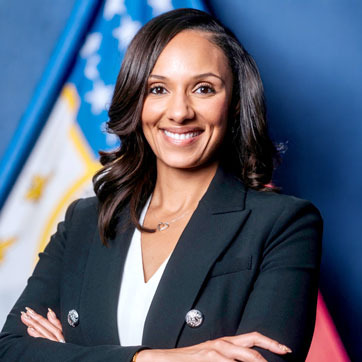
Mary Sheffield
Mayor of Detroit
Citywide
Runs the departments that pick up the trash, fix the water, plow the streets and answer the phone.
Appoints the directors of those departments.
Proposes the city budget that Council then adopts, amends or rejects.
Signs what Council passes, or vetoes it. Council can override a veto.
What this office cannot do: The Mayor does not decide your district's zoning case or your ticket. Those belong to Council and the hearing offices.
Executive orders 2026-01 through 2026-06 are published on the Mayor's page, including property tax assessments, streetlighting, and the affordable housing trust fund.
(313) 224-3400 · 2 Woodward Ave. Suite 1126, Detroit, MI 48226
Every member of Council does the same four things, then answers for one district or the whole city:
Votes on every ordinance, contract and the city budget.
Holds the public hearings where a resident can put a problem into the record.
Can push a department on a district problem and ask for a written answer.
Can put a resolution on the agenda for the whole Council to vote on.
What one member cannot do: One member cannot order a department to act, cannot change a state or federal law, and cannot decide a court case. Council acts by majority vote.
“From grassroots organizing to being a Charter Revision Commissioner, my mission has always remained the same: to serve our people.”
His own words, on the city's District 7 page
A native Detroiter and a District 7 resident. His page states no start year for the seat, and does not claim one; it points instead to more than a decade of work before it.
Where to walk in
Coleman A. Young Municipal Center, 2 Woodward Ave., Suite 1340, Detroit, MI 48226
District 7 office, St. Suzanne Cody Resource Center, 19321 W. Chicago, Detroit, MI 48228
Who answers the phone
Ray Duncan, Chief of Staff · (313) 480-1445
Staci Bryant, Director of Constituent Services · (313) 450-7605
Yolanda Lockett, Community and Policy Affairs Liaison · (313) 542-2163
Named staff are published on his city page. Ask for constituent services first.
Committees and the body's work
Runs a monthly District 7 community meeting with his office.
District 7 Community Advisory Council is the standing resident group he works with.
Not listed as chair of a standing committee on the city's page.
He asked to chair the Budget, Finance and Audit committee because, in his words, "for a lot of the folks, their needs are budgetary." That is where most of his actual work shows up: a report requested, a vote cast, a resolution drafted. Not a speech.
One rule for this section: an endorsement is not a donation, a resolution is not a law, and a report is not a result. Each row below says which of those it is.
Promises, checked one by one
Public safety
A vote on the record
June 30, 2026: he voted no on the $2.1 million ShotSpotter extension, and his Public Health and Safety committee recommended the full Council deny it. He said $2 million over nine months "is not in our best interest." The Council extended it 5-4 anyway, through March 2027.
He voted his position. He lost the vote.
Water affordability
No result yet
He speaks alongside the Coalition for Property Tax Justice about roughly $600 million owed to overtaxed homeowners, and water affordability comes up in the same breath. The money question has no path right now: the charter amendment that would have funded compensation failed at the primary.
Advocacy, not a delivered program.
Protecting voting rights
Promise only
We could not find a voting-rights item he has carried as a council member. Elections are run by the elected City Clerk and the Department of Elections, and the money for that department passes through the committee he chairs.
No bill found. The lever he holds is the budget line.
Equitable transportation
Promise only
We could not find a transportation item he has carried. DDOT's budget passes through his committee, so the first place a transportation decision will show up is a budget hearing.
No bill found yet.
Participatory budgeting
Asked for, not funded
He said he would build a Detroit version of participatory budgeting, where residents vote on a pool of money after public workshops. Public comment at budget hearings still shows residents asking for participatory budgeting funding, which means it is not operating yet.
A stated plan. No pool of money yet.
A civic education corps
Announced, not confirmed
He said he would create a civic education corps starting with youth engagement, teaching residents the property maintenance rules. We found no program page, budget line or start date for it.
Announced. Nothing public confirms it opened.
What he has actually done, with dates
January 6, 2026
His first resolution: what survives when ARPA expires
He asked for a report on which American Rescue Plan programs can keep going on General Fund dollars, and whether any legal limit blocks taxpayer money from being spent on certain social programs.
Where it stands: Resolution passed on his first day of formal session. The answer arrives through the budget.
He asked for the committee and got it. Latisha Johnson is vice chair and Mary Waters is the third member, so the three of them decide what gets a budget hearing.
Where it stands: This is the seat with real leverage: taxes, fees, bonds, and every contract that needs money.
His committee had recommended denial. He pressed the department on cost and on what the sensors record. The extension cost $2.1 million for nine months.
Where it stands: Contract extended to March 2027. His side lost. The ACLU of Michigan testified on his side of it.
He formally requested a resolution urging the Michigan Public Service Commission to hold public hearings in Detroit whenever DTE asks for a gas or electric rate increase.
Where it stands: The Legislative Policy Division produced the resolution and listed it on July 24. We could not confirm the Council adopted it.
Redistricting left District 7 without a recreation center. A $20 million donation from Pistons owner Tom Gores toward a facility in Rouge Park was announced in 2022, and he says he is working to find out why it has not moved.
Where it stands: No opening date. The resident-visible version of this promise is still a construction site or an empty lot.
He speaks at its events on the $600 million in overtaxation, and its demand is compensation for homeowners.
Donor? A coalition he stands with, not a donor.
The money, and who paid
The short answer on donors: his campaign was paid for mostly by small individual donations, not by the organizations that endorsed him. That is what the filed reports show as described by the reporters who read them.
Raised
$162,970 for the 2025 council race
Spent
$133,377
From eight fundraisers
$20,573
Small money
More than 100 individual donations under $10; a surge of donors giving under $25
Volume
More than 2,000 contributions, averaging just over $80 each
He gave
$100 to Latisha Johnson's District 4 campaign
The same reporting found his opponent in District 7, Karen Whitsett, was boosted by donors affiliated with real estate development. A development family put roughly $37,500 into the District 3, 5, 6 and 7 races together; the reporting does not attribute any of it to him, and we will not.
What we do not have: his itemized filing in front of us. The city does not publish these statements in one searchable place we could find. The reports are public documents, so ask the City Clerk's office for the filed statements if you want the donor names one by one. Until then, treat "endorsed by" and "paid by" as two different questions.
The city does not publish what a candidate promised on the campaign trail. What it does publish is what that office has filed, introduced, voted on, and reported since. That is enough to judge, if you know where to look.
What did they say they would do?
Their own city page states their priorities in their own words, and most members keep district meetings, newsletters and task forces. Read the member's page first, then their statements. Treat a stated priority as a promise, not a delivery.
Did anything actually move?
Open the legislation search and the agendas. A thing that moved has a resolution number, a date, a committee, and a vote. A press release is not a vote.
Does the money match the speech?
The adopted budget says what was funded. Follow the item they claim, find it in the budget or the contract, and see whether the dollars are there this year or only next year.
Have they been there long enough to be judged?
A brand new member has no record yet, and saying so is fair. A twelve-year member has had twelve budgets. Length of service is not a virtue by itself; it is the size of the sample you get to check.
A standing committee is where a bill is actually argued before the full Council votes. Five of them meet on a published schedule, and the office that chairs one controls what gets a hearing.
Budget, Finance and Audit
Where the money is checked before the full Council votes on it.
Planning and Economic Development
Zoning, land, development deals and tax abatements.
Public Health and Safety
Health, police, fire, and the city's safety policy.
Neighborhood and Community Services
Blights, parks, neighborhoods, and the services residents touch daily.
Internal Operations
How the Council and the city run themselves: staff, rules, process.
Rules
The body's own procedures and appointments.
One honest limit: everything here was published by the office it describes. This page has not audited any of it. The agenda record and the budget are the independent check, and both are linked below.
The record and the ballot
Chief Elections Officer
Janice M. Winfrey
Detroit City Clerk
Citywide
Runs city elections as Chief Elections Officer, and keeps the voter rolls and absentee ballots.
Keeps the record: agendas, minutes, ordinances, and the corporate seal.
Administers oaths and certifies copies of city records.
Runs the Citizens Information Service, which refers a resident to the right department.
What this office cannot do: The Clerk records decisions and runs elections. The Clerk does not vote on the budget or set policy.
Council agendas and the Detroit Archives and Records Management Division are both under this office.
Detroit sits inside Wayne County. Five county offices are elected countywide, and every Detroit voter votes for all five. They answer for the jail, the courts' record, the prosecutor, the elections and delinquent taxes, not for the city's trash or police.
County Executive · elected countywide
Warren C. Evans
Wayne County Executive
Runs the county departments: roads, public health, human services, the airport and the jail budget.
Proposes the county budget that the 15-member Commission adopts, amends or rejects.
Signs county ordinances or vetoes them. The Commission can override a veto.
What this office cannot do: The county does not run the city's police, trash or water. It cannot decide your ticket, your zoning case or your court case.
Operates the Wayne County Jail: bookings, inmate search, bond, visitation and commissary.
Provides security for the county courts and serves civil court papers.
Patrols county roads and parks, and runs the narcotics tip line at (313) 224-2593.
What this office cannot do: The Sheriff does not police inside the city of Detroit, where DPD does, and does not decide guilt, bond or release. A judge sets bond.
The Chief of Police is appointed by the Mayor, not elected: the Mayor picks the chief, and the Board of Police Commissioners holds the department's policy and discipline hearings. The precinct is your address, not a person.
Signs, vetoes or line-item vetoes what the House and Senate pass. The Legislature can override a veto with two-thirds of each chamber.
Issues executive orders and directives that run state departments, from MDHHS to MDOT to the Department of Corrections.
Appoints department directors, boards and commissions, and can commute a sentence or grant a pardon on a recommendation from the parole board.
Proposes the state budget the Legislature then rewrites, and can call a special session.
What this office cannot do: The Governor cannot write a law, raise a tax or sentence anyone. She also cannot order a county prosecutor, a sheriff or a Detroit precinct to act: those answer to their own voters or the city.
Michigan's term limit, adopted in 1992, allows two terms, so this office turns over in January 2027. The November 3, 2026 election decided who holds it next; the office's own page is the record of who holds it now. Lieutenant Governor Garlin Gilchrist is on the same ticket and presides over the Senate.
Find your state representative and your state senator
These are two different people on two different maps. The House has 110 districts, the Senate has 38, and the lines were redrawn for the 2022 election, so a district number you learned years ago is probably wrong. Each lookup takes your street address and ZIP and returns the person who actually represents that block.
Michigan House of Representatives
110 districts · two-year terms · the chamber where every state bill starts and where the state budget is drafted
Attorney General and Secretary of State are elected in the same November as the Governor and take office the following January. The state's own pages name the current officeholder, so nothing here can go stale.
Immigration enforcement is federal, not city or county. ICE runs detention and removal; USCIS runs applications and benefits. Neither reports to the Mayor or the County Executive.
County, state, federal and ICE names and links checked against each office's own site on November 11, 2026.
The Governor's office was confirmed on the state's own site the same day.
Who is not on this page
The department directors who run the water, the buses, the police and the permits are appointed, not elected, and the city's own directory is the complete list. This page names the people a resident can hold accountable by vote, and the offices that own each job.
If a name, a district or a phone number here is out of date, the city changed it first. Send it in and this page gets corrected against the official record. Nothing here is saved, and nothing is sent anywhere.